
Sat, 17 Aug 2024FamilyCamping
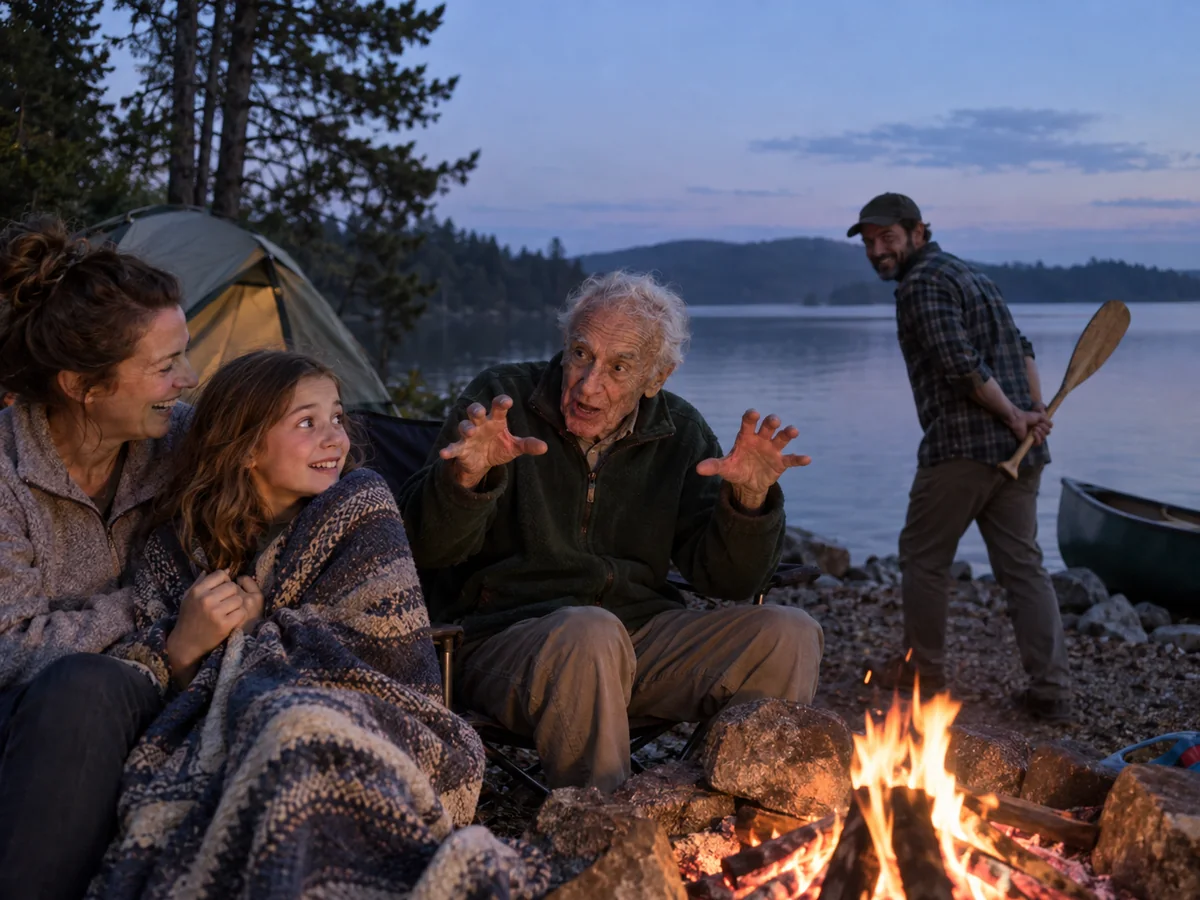
The lake monster
W
Grandpa WaltTold in a call
“I told Lily there was a monster in that lake. I never thought she’d believe me for three whole summers.”
3 additions waiting for WaltReview
The venture I’m building now · Co-founder and COO
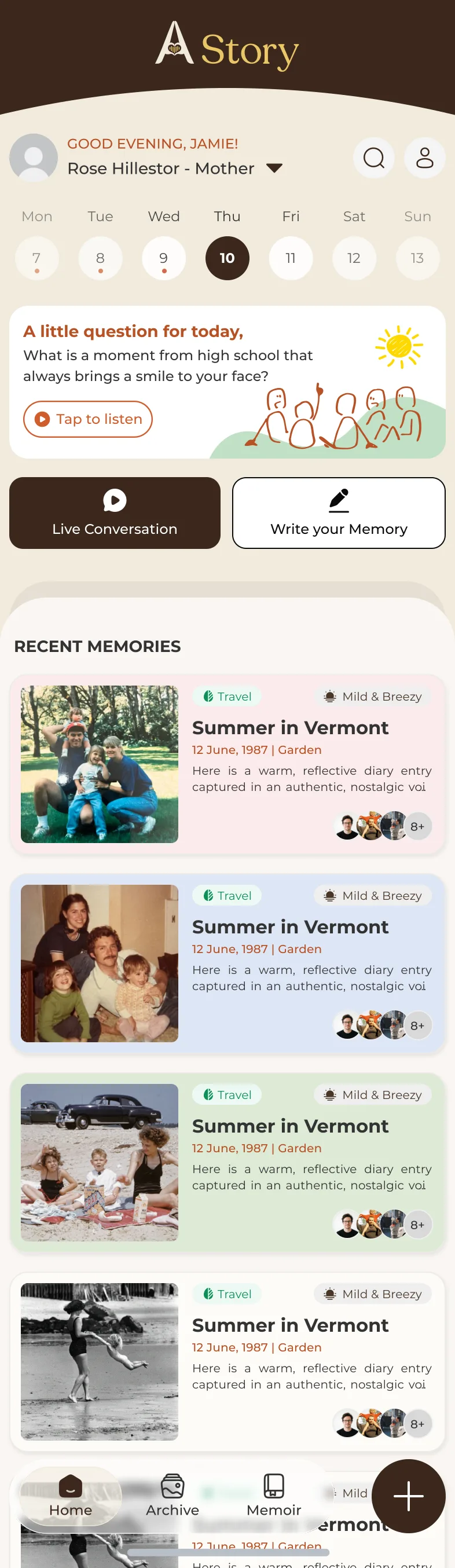
A Story calls someone you love, listens, and follows up the way someone who knows them would. What they say becomes a private archive the whole family can add to.
Not a memoir to finish.
A Story to keep, and to carry on.
“What did you
notice first
about him?”
01What gets lost
02The conversation
Some stories only appear because somebody asks twice. When someone lets something slip on the way to answering a different question, A Story drops its own question and goes after it.
A Story calls Joan, 84. Her son Paul set up the call. Here is how it goes.
One question, not a list of them.
You don’t start with the fifty-one years. You start with one thing. What did you notice first about him?
Joan answers, then adds three words she didn’t have to.
His handwriting. I knew his handwriting a year and a half before I properly knew his face — he was posted out to Aden and we wrote. I’ve still got them all in a biscuit tin. All but one.
It drops its next question and goes after those three words.
All but one. So you’ve counted them. What happened to the one, Joan?
I put it on the fire. Nineteen seventy-one. It was the one where he asked me to marry him, and that year I couldn’t have it in the house.
It keeps 1971 for later and doesn’t push. Every call picks up where the last one stopped.
We’ll come back to 1971, and we don’t have to rush at it. First — the tin. Where does it live?
Illustrative, scripted call from the A Story website. Names are fictional.
03How it works
No typing, nothing to open or save. The storyteller only has to answer the phone.
A couple of minutes on their phone or tablet, and the hour A Story should ring. You can do it while they’re in the next room.
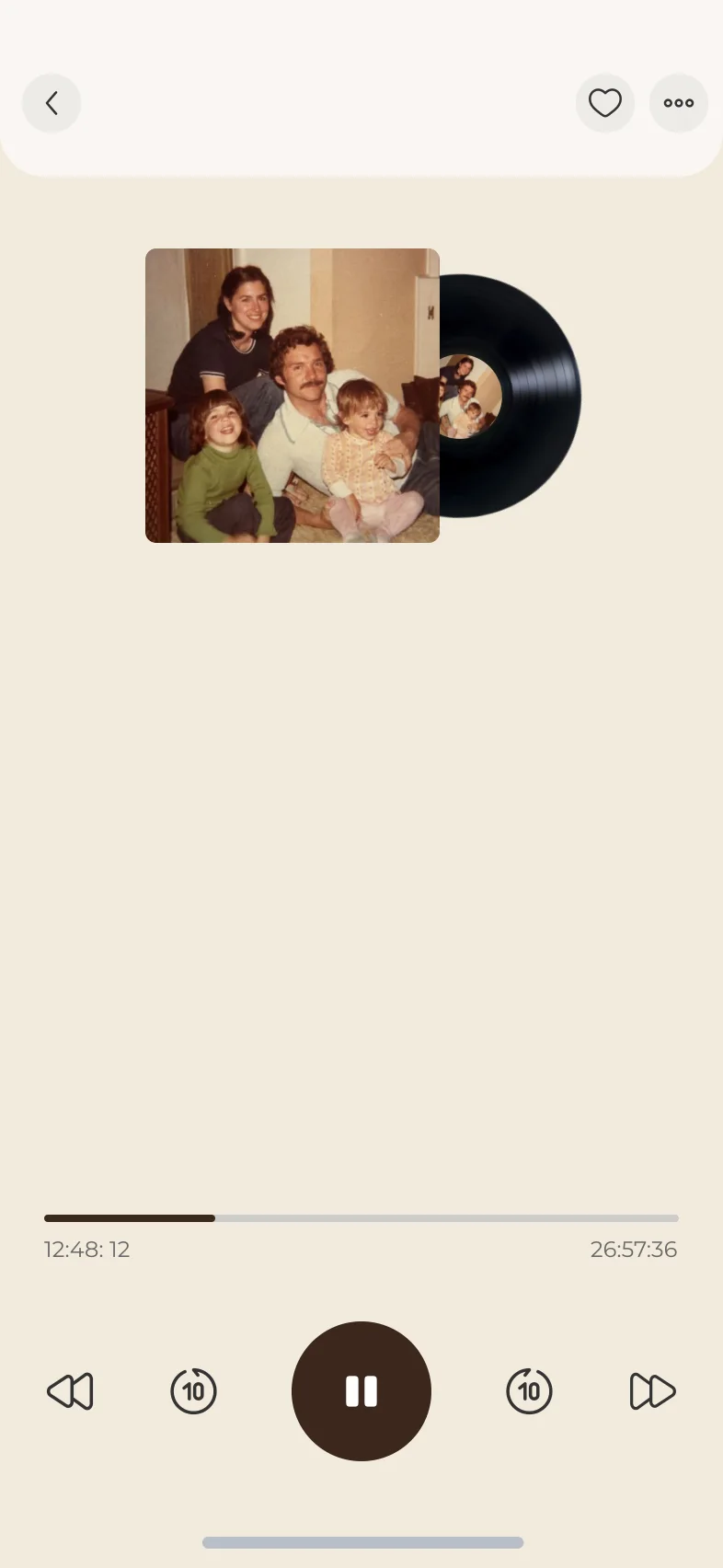
No typing, nothing to open or save. Twenty minutes is a real conversation, and the next call picks up where the last one stopped.
Invite anyone to read, correct and add their own memories. Inviting fifteen people costs the same as inviting nobody.
04Everyone who was there
Invite the people who were there. Their photos, voices and versions become part of the same story, through one link with no account needed. Nothing replaces anything else, and nothing appears until the storyteller says yes.
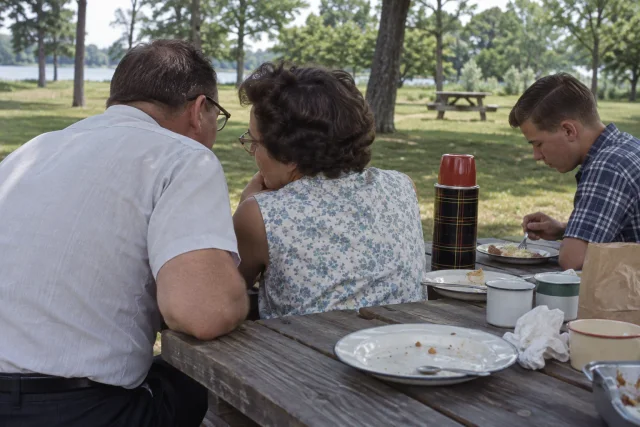
Sat, 17 Aug 2024FamilyCamping
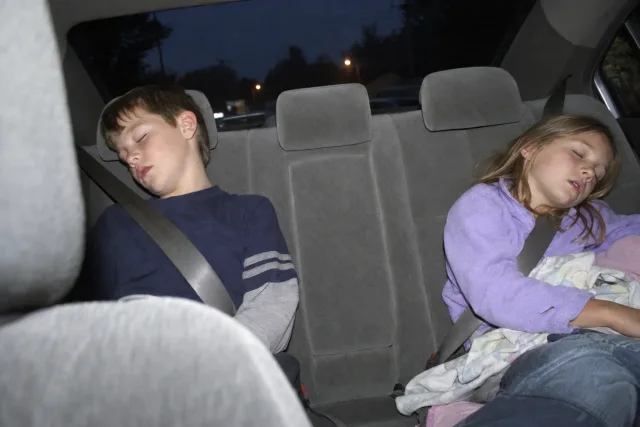
“I told Lily there was a monster in that lake. I never thought she’d believe me for three whole summers.”
“She didn’t sleep. She kept watch at the tent door with a flashlight.”
“There WAS a monster. I heard it breathing.”
“The monster was me. With a paddle. Sorry, Lily.”
Illustrative family and memory, from the A Story website. Names are fictional.
05Not a memoir
The mistake is thinking a life becomes worth recording only when it’s nearly over. You’re already living the part you’ll miss later.
Questions that follow what was actually said, not a fixed list.
Relatives add to the same memories, each in their own name.
When people remember it differently, both accounts stay, side by side.
Built for the life being lived now, not only the past.
A living archive that carries on after anything is printed.
06Who it’s for
The same conversation serves different people: a family keeping its stories, a care team getting to know a resident, and an organization holding on to what its people know.
01Families
Nobody loses the wedding photos. They lose everything around them — the story he tells every Thanksgiving, and why everyone in that photograph is laughing.
Help them set up once, choose a comfortable hour, and let the conversation find its own way.
For families on astoryapp.com02Care communities
The work they did. The music in the house. The way they made Sunday lunch. Give those stories somewhere to stay — and give the people caring for them a way to learn them.
What they did for a living, who they miss, the song that settles them. The kind of detail that turns care into conversation.
For care communities on astoryapp.com03Organizations
The decision that changed direction. The colleague who made it work. The knowledge that never reached a handover document.
Put firsthand accounts beside documents and photographs. Keep who said what, and when.
For organizations on astoryapp.comThe current chapter